





Dong Nai and Hiroshima Prefecture collaborate on developing circular agriculture and environmental management
On November 4, a conference was held in Dong Nai to promote cooperation between the Dong Nai City Department of Agriculture and Environment and the Hiroshima Prefectural Department of Commerce and Labor (Japan). The discussions focused on developing high-tech agriculture, treating and recycling agricultural by-products and waste, environmental monitoring, biological agricultural inputs, and sustainable development.
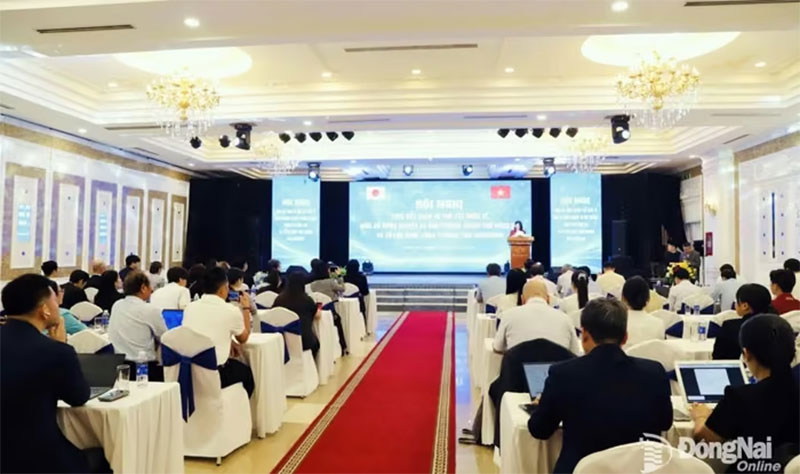
Overview of the conference.
Dong Nai has a large-scale agricultural production sector, with many key crops and livestock species having established concentrated production areas. The livestock sector includes approximately 4 million pigs and 36.5 million poultry. More than 90% of solid waste, such as manure and livestock bedding materials, is collected and treated, providing a significant source of raw materials for organic fertilizer production and circular economy models.
In crop production, agricultural land covers more than 1 million hectares, accounting for 84.32% of the province's total natural area. Each year, more than 1.5 million tons of by-products from cultivation and preliminary processing are generated, of which approximately 551,000 tons are collected and treated. These by-products represent a significant potential resource for reuse in agricultural production, processing, and biomass energy.
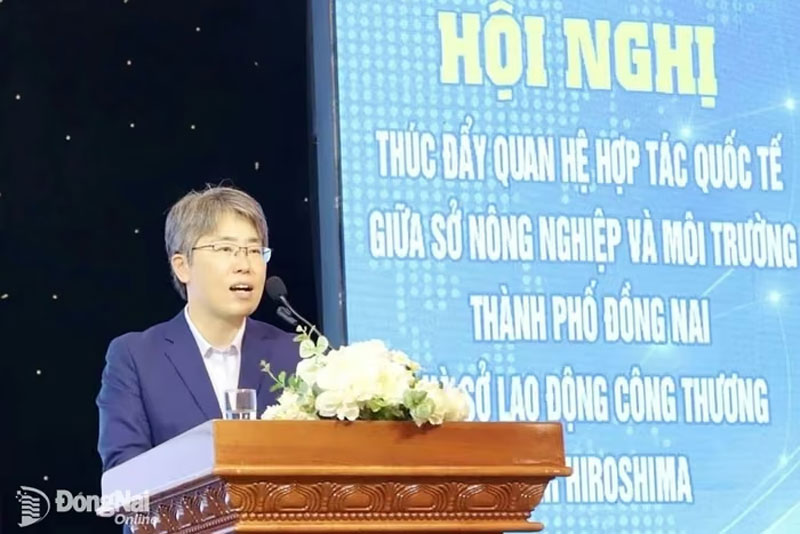
Ms. Kakegawa Masako, Director of Industrial Policy at the Hiroshima Prefectural Department of Commerce and Labor, delivers remarks at the conference.
The city has also developed its agricultural pre-processing and processing sector, with approximately 799 collection, pre-processing, and processing facilities. Among them, 150 facilities and businesses have adopted advanced quality management systems. This provides an important foundation for increasing added value and expanding market opportunities.
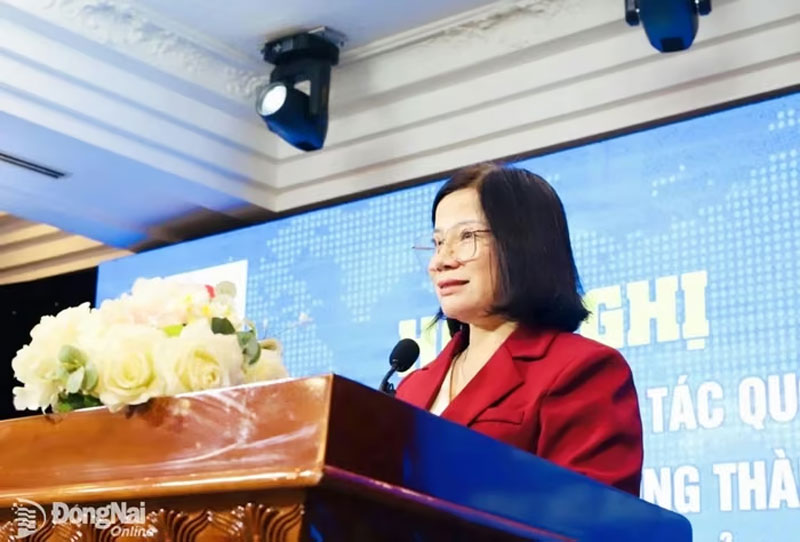
Ms. Le Thi Anh Tuyet, Deputy Director of the Dong Nai City Department of Agriculture and Environment, introduces the city's strengths in developing circular agriculture at the conference.
Hiroshima Prefecture has many economic strengths comparable to those of Dong Nai City. The prefecture is home to numerous historical and cultural attractions, as well as beautiful natural landscapes. It has achieved balanced development between industry and agriculture, with highly developed aquaculture, seafood farming, and livestock sectors.
Its industrial sector encompasses a wide range of manufacturing industries, with a strong focus on environmental technology, energy, semiconductors, biotechnology, and healthcare.
Hiroshima is currently focusing on developing its environmental and energy industries in both the Japanese and international markets. The prefecture has established cooperation programs with other countries in the fields of environment and energy, particularly carbon recycling, through partnerships among businesses, universities, and government agencies.
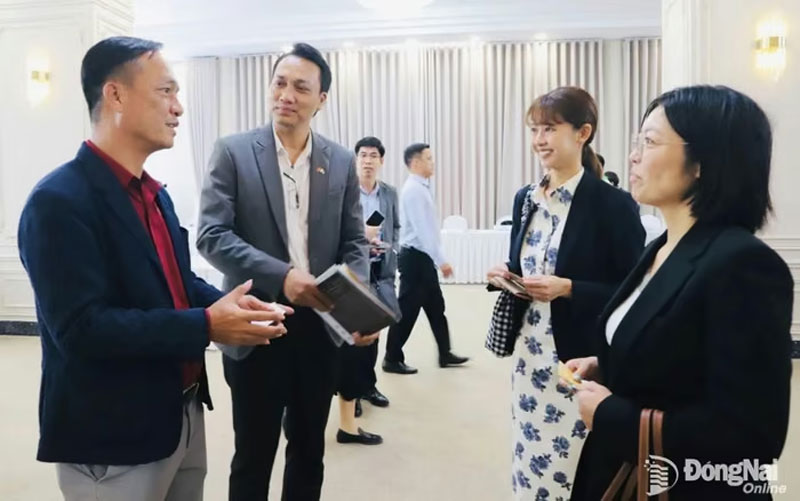
Dong Nai businesses exchange views with Ms. Tatara Shoko, Consul at the Consulate-General of Japan in Ho Chi Minh City (second from right), on the sidelines of the conference.
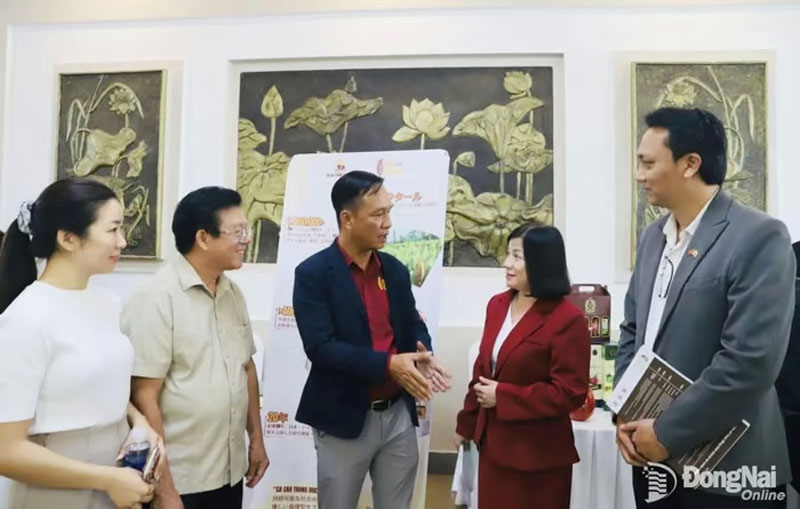
Ms. Le Thi Anh Tuyet, Deputy Director of the Dong Nai City Department of Agriculture and Environment, exchanges views with businesses attending the conference.
The conference provided an opportunity for both sides to exchange ideas and promote cooperation in agriculture, forestry, fisheries, and environmental protection in a greener, more efficient, and sustainable direction. As Dong Nai reorganizes its production landscape based on the strengths of each region, linking raw material production areas with processing facilities, logistics, and markets, the agriculture and environment sector has identified high-tech agriculture, circular agriculture, and emissions reduction as key development priorities. These efforts will contribute to achieving the goal of net-zero emissions by 2050.
In Dong Nai, businesses from Hiroshima Prefecture have already established several cooperative projects. Notably, Trong Duc Cocoa Co., Ltd. and Tromso Joint Stock Company have partnered to implement a project to process cocoa husks into biochar, apply biochar in agriculture, and develop carbon credits. In the initial phase, the project is expected to process approximately 6,000 tons of cocoa husks and 8,000 tons of durian husks annually.
At the conference, several businesses from Hiroshima Prefecture and enterprises and farms in Dong Nai City signed memorandums of understanding (MOUs) to cooperate in circular agriculture, clean agriculture, and carbon recycling.
Source: baomoi.com